
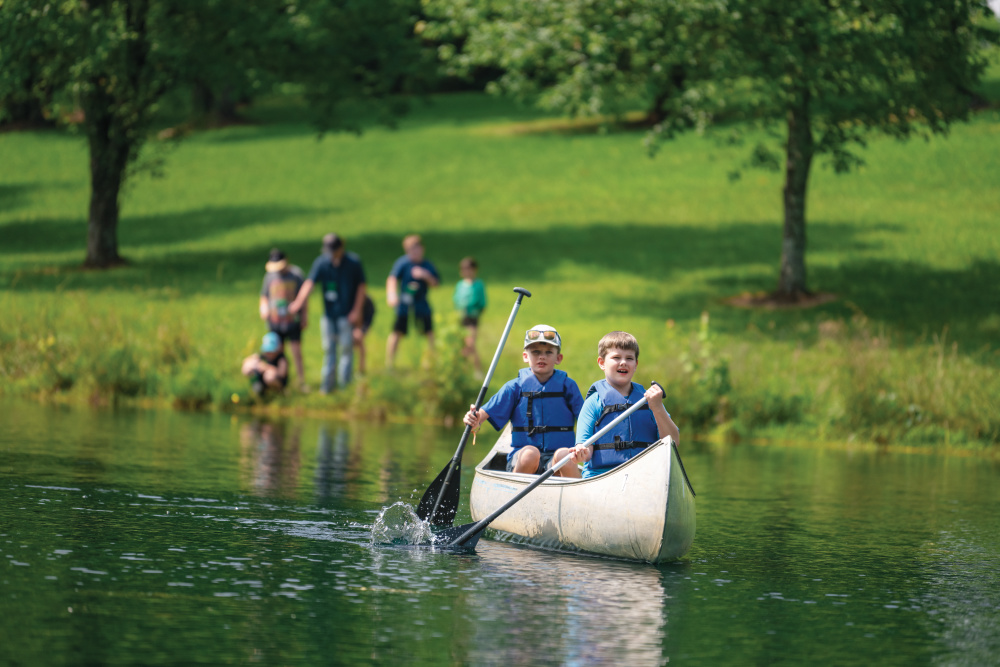
Campers take out a canoe at the 4-H Camp in Greeneville; Photo credit: Misty Herron
Since 1953, generous Tennessee 4-H Foundation donors have been the steady hands nurturing the state’s largest youth development program. Thanks to Tennessee legislators, in 2025 state funding for Tennessee 4-H Centers has been allocated to expand 4-H facilities and programming, ensuring 4-H continues to grow.
The collaborative power of public, private and community partners is undoubtedly cultivating a stronger foundation for the future leaders of Tennessee.

4-H Camp in Greeneville; Photo credit: Misty Herron
Thankful for State Funding for Tennessee 4-H Centers
In April 2025, the Tennessee General Assembly and Gov. Bill Lee approved a budget that included $45.25 million for infrastructure enhancements at 4-H centers in Greeneville, Crossville, Columbia and Middleton (Lone Oaks).
See more: TN 4-H Alumni Leadership Award Goes to Gov. Bill Lee
This investment is set to construct sizable 4-H STEM laboratories, as well as expand lodging, technology and other amenities across the centers.

Hands-on learning at 4-H Camp in Greeneville; Photo credit: Misty Herron
“Before STEM became a curriculum buzzword, 4-H was sparking interest in science, technology, engineering and math,” says Clint Parker, Sumner County University of Tennessee (UT) Extension agent and county director. “4-H understands the best way to get youth involved is through active participation.”
By further integrating STEM into the centers, 4-H creates a more inclusive environment where every child can explore diverse interests.
“These landmark STEM centers will help open new doors for curiosity and connection through well-rounded opportunities,” Parker says.
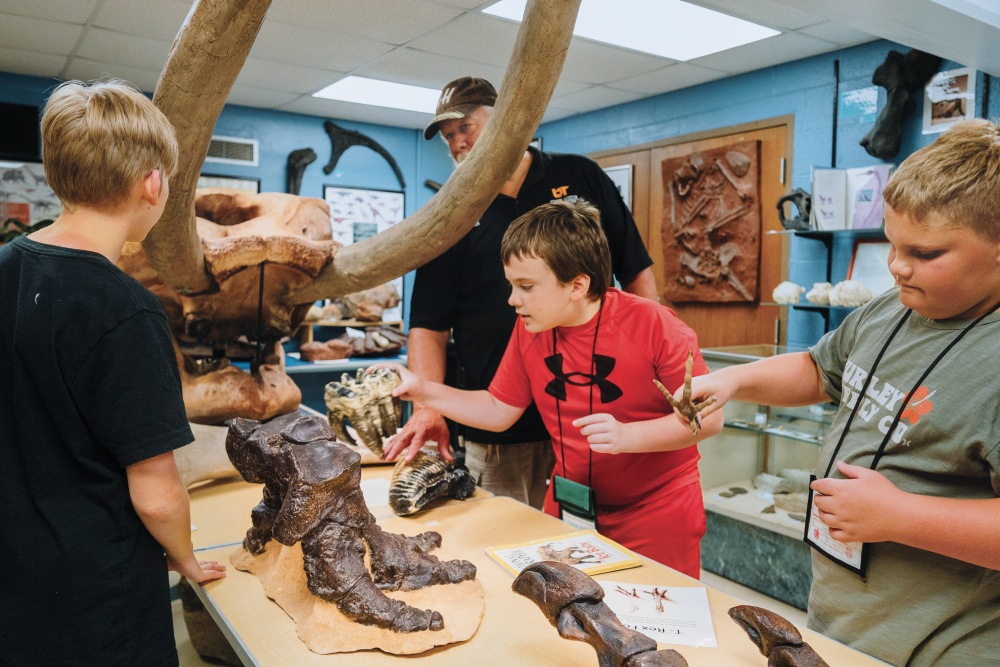
Campers learn about fossils at the 4-H Camp in Greeneville; Photo credit: Misty Herron
The organization’s “learn by doing” focus has proven successful in 4-H’s real-world classrooms, both in traditional outdoor settings and innovative learning labs.
See more: Tennessee’s 4-H Centers Connect Students With Real-World Experiences
“By enabling campers to dive into cutting-edge STEM activities, 4-H will present new possibilities and new career paths,” says Lacy Harnage, director of Clyde York 4-H Center. The impact of 4-H camps extends well beyond weeklong summer camp sessions. Many local and state 4-H organizations offer opportunity for development for all ages year-round.

Physics class at the 4-H Camp in Greeneville; Photo credit: Misty Herron
“The installation of a dedicated STEM center will make a world of difference for so many Tennesseans,” Harnage says.
She says the Crossville multipurpose STEM hub will serve school groups and the community.
Covering the Cost
Still, Harnage attests donor support must not waver.
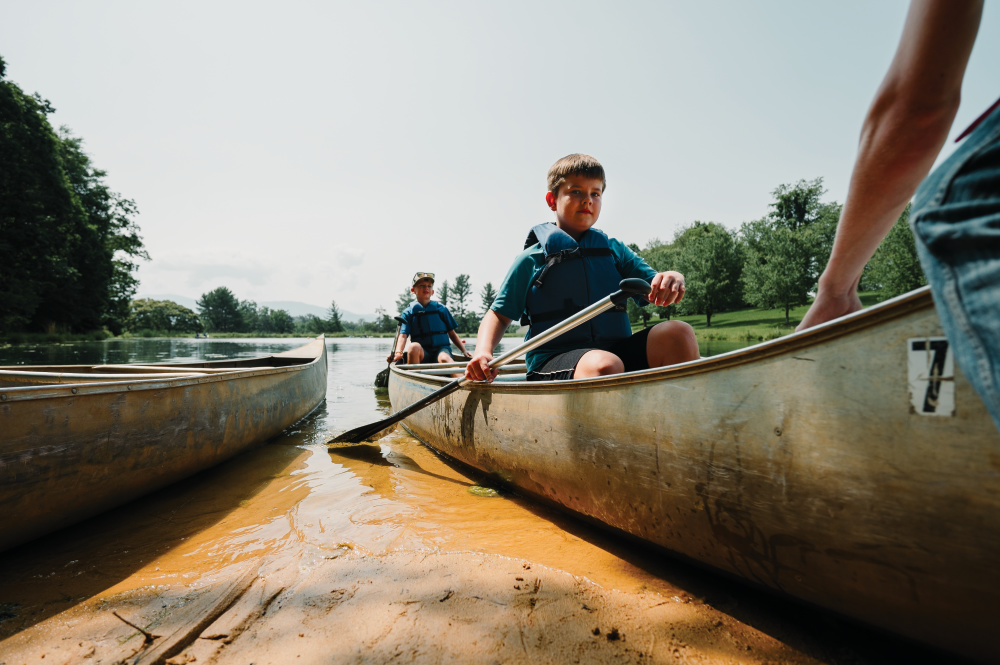
Campers take out canoes at the 4-H Camp in Greeneville; Photo credit: Misty Herron
“These pioneering STEM facilities cannot fulfill their remarkable promise unless every child can walk through their doors,” Harnage says. “Philanthropic individuals, community foundations and local donors remain key to ensuring that every child, whether from a rural farm or an urban neighborhood, has access to the tools, mentorship and opportunities to unlock their true potential.”
While legislators’ bold funding addresses infrastructure, it doesn’t break down access barriers for local youth and their families. The journey from county 4-H club to summer camp often requires scholarship support to cover transportation, tuition and associated costs. For many families, those expenses are prohibitive without philanthropic aid.

4-H’ers learn responsibility, like keeping their cabins clean, while at 4-H camp; Photo credit: Misty Herron
See more: Take a Glimpse Into the Four 4-H Centers Across Tennessee
“Having grown up as a 4-H camper, I have experienced firsthand the life-changing impact this formative organization fosters at summer camp,” says Tennessee 4-H Camping Specialist Mitch Beaty.
Each summer, more than 5,000 Tennessee youth attend 4-H camps, gaining access to unparalleled experiences, outdoor adventure, leadership development and confidence-building.
See more: Tennessee 4-H Campers Enjoy Science, Tech and the Great Outdoors

Campers enjoy the playground at the 4-H Camp in Greeneville; Photo credit: Misty Herron
Funding the Fun
In many counties, partial camp scholarships are awarded based on financial need, 4-H participation and first-time camper status.
“These scholarships directly reduce the burden on families and make camp possible for youth who otherwise couldn’t afford the fees,” Beaty says.
Some camps have added expenses, such as special activity fees or event materials, which are not fully covered by camp registration costs. These gaps are often filled by donor backing. Donor-funded support and scholarships help level the playing field, Beaty explains, giving every child across all 95 counties the chance to attend 4-H camp.
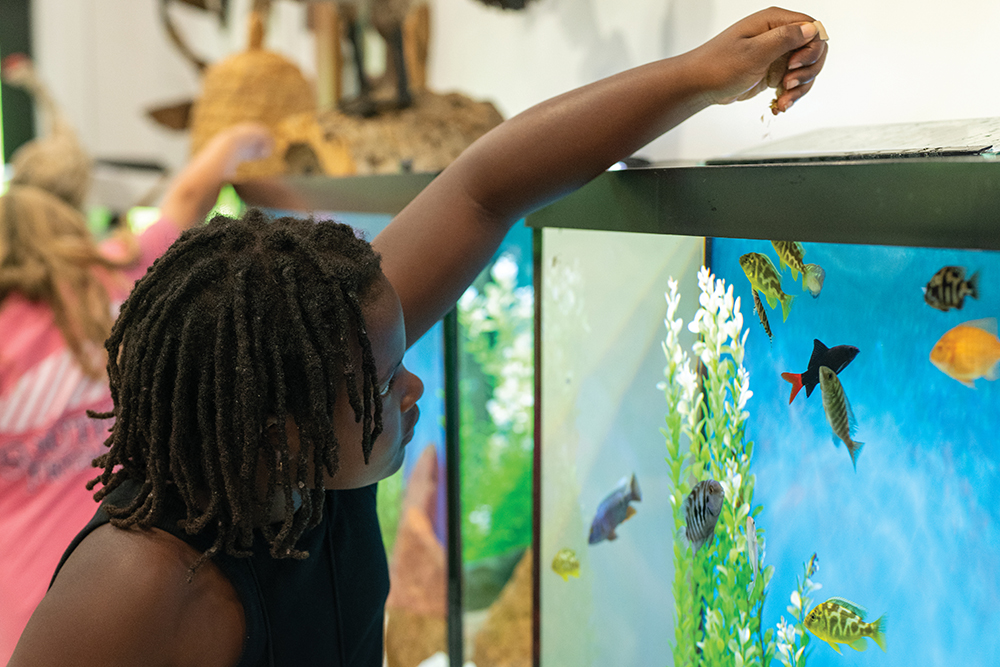
4-H Camp in Greeneville; Photo credit: Misty Herron
“I wouldn’t have been able to go to 4-H camp without a scholarship,” says Nevalena Preston, a 12-year-old camper from Sumner County and winner of the second annual 4-H T-shirt contest. “I got to enjoy so many different kinds of activities.”
The importance of 4-H camps lies in their ability to blend adventurous exploration with education and purposeful friendships.

4-H camp summer fun isn’t complete without a dip in the pool; Photo credit: Misty Herron
4-H camps cultivate curiosity and compassion among youth, empowering them to grow into skilled, community-driven adults. Whether through a week in the wilderness or a year-round project in the comforts of home, 4-H continues to prove that the campfire’s glow can illuminate a lifelong journey of learning and leadership. And donors at every level strike the match.