
In 2020, for the 111,000 4-H’ers across 95 counties in Tennessee, the COVID-19 pandemic left an impact that changed how the organization operated in the 2020-21 year – and will continue to operate moving forward.
Emily Barton has been a 4-H Extension agent for six years in both Carter and Hawkins counties and, before that, was a member in grade school. She says 4-H helped her break out of her shell and find a group where she felt comfortable being herself.
When shutdowns began, forcing everyone to stay inside and avoid inperson contact, Barton says the organization began shifting activities to digital platforms, working hard to make sure members still got the interaction and activities as best they could.
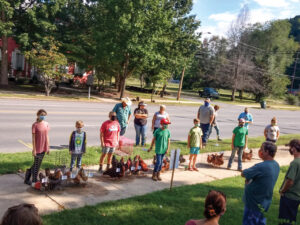
They set up different options for different school systems, including live Zoom sessions, pre-recorded sessions and in-person sessions if possible.
“Our judging teams moved to these digital platforms, too,” Barton says. “Our forestry coach, who has been volunteering since the 1980s, learned Zoom so he could continue training our teams.”
Despite the initial challenge, Barton says that many of the digital platforms initially utilized in 2020 are still helpful moving out of restricted gathering guidelines.
Pandemic Pivot
“The pandemic allowed me to build better ways to stay in contact with members and work with them no matter where they are,” she says. “During the onset of the pandemic, many of the technology tools we used to reach clients have proven to still work now that we are face to face.”

Kane Reeves, Extension agent and county director for Madison County, says that going virtual required 4-H to be extremely organized in its activities to make it fun and engaging for members.
“As long as we were organized, we found that members were still eager to participate,” he says. “For example, we moved contests online, like our baking contest, and members could bake at home, then upload photos of their cookies.”
He added that the use of technology brought to light a new area of learning, as they found some members struggled or didn’t have resources for virtual learning.
“It showed us that moving forward, we can focus on teaching more around the use of technology and getting members prepared for the workforce,” Reeves says. “I think coming out of the pandemic, we’ve reiterated our mission of hands-on experiences. Youth really want to be in person and get that tangible experience, so hopefully we don’t have to be fully virtual again in the future.”

Connecting During Covid
State 4-H Program Leader Justin Crowe serves as the administrator of the Tennessee 4-H program across the state’s 95 counties. He notes that some of the main challenges in 2020 were reaching youth and the need to pivot programming quickly.
“Some 4-H agents had challenges with being able to physically visit schools if they weren’t allowing outside visitors,” he says. “We continued to offer virtual programs, but some youth were simply tired of being virtual. Our agents pivoted and did the best they could to provide meaningful and engaging experiences while working within the parameters of the situation.”
He adds that positives emerged despite the challenges, and moving forward, many of the current face-toface programs will have the potential to be hybrid activities.
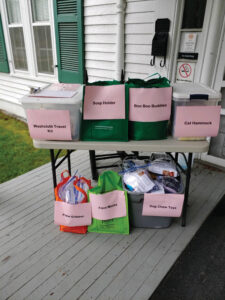
“We are committed to being face to face to make sure youth are exposed to something positive, but will work hard to accommodate all youth,” Crowe says. “For example, not all counties have a veterinary sciences project group for 4-H. We have partnered with the UT College of Veterinary Medicine to offer a virtual project group experience.”
You can help fund future virtual 4-H projects and programs by giving to the Communications Project. Donations may be made by visiting tn4hfoundation.org/donate.